Practical Considerations for Mandala Pattern Stencil Doodles Sketch Design Resources
For creators seeking versatile floral and botanical art, the term “Mandala Pattern Stencil Doodles Sketch” describes a specific category of digital assets. These resources typically combine the structured, repeatable geometry of mandala or stencil patterns with the freeform, organic quality of hand-drawn doodles and sketches. The result is a hybrid design element that bridges precise layout and artistic looseness, often centered around wreaths or floral frames. Understanding what this label entails, and how it compares to other available illustration formats, is crucial for selecting the right tool for your project.
The Distinct Nature of Hybrid Sketch Assets
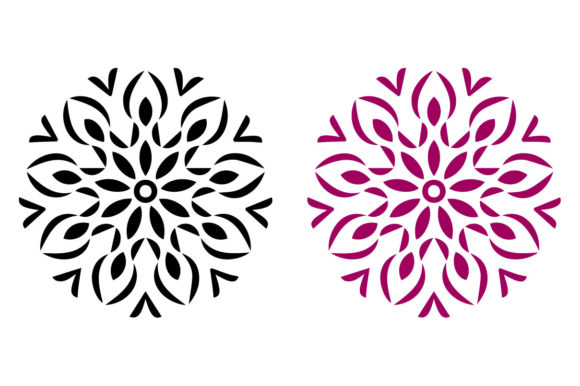
What makes a resource like Mandala Pattern Stencil Doodles Sketch distinct is its inherent duality. It is not purely a rigid, geometric template, nor is it solely a loose, interpretive sketch. The “stencil” or “mandala pattern” aspect implies a framework—a circular or symmetric structure that provides consistency and ease of replication. This is particularly valuable for applications requiring a balanced composition, such as logo frames, invitation borders, or consistent decorative elements across a series of designs.
The “doodles sketch” component introduces the hand-drawn aesthetic. This means illustrations of flowers, plants, and leaves within the structure appear as if sketched with a pen or pencil, featuring varied line weights, imperfect curves, and a personal touch. This aesthetic often resonates more with audiences looking for warmth, authenticity, or a craft-oriented feel compared to perfectly uniform vector clip art. When these two qualities are merged, the asset offers a guided creativity: you have a reliable foundational shape filled with artistic, editable details.
Comparing Formats: Editable Vector Files versus Static Images
A key decision factor when evaluating a Mandala Pattern Stencil Doodles Sketch is its technical format. Many such resources are offered as editable vector files, such as Adobe Illustrator EPS files, alongside a JPEG preview. This format comparison is fundamental. A static JPEG image is a final, rasterized picture. Its colors, scale, and individual elements are locked. You can place it into a layout, but you cannot separate the leaves from the flowers, change the stroke width, or recolor elements individually without extensive manual editing.
The editable vector alternative, however, transforms the resource from a finished picture into a design toolkit. Each object—every leaf, petal, and stem—is typically a distinct, selectable path. Colors are defined by swatches or fills that can be globally modified. This is a significant strength for crafters and designers who need adaptability. You might use the same wreath base for a spring project with pastel greens and yellows, and a winter project with deep blues and silvers. The vector format enables this without redrawing. The tradeoff is that working with vector files requires software like Illustrator or Affinity Designer and a basic understanding of those tools. For someone who only needs a single, fixed image for a one-off use, the simpler JPEG might suffice, representing a practical alternative.
Strengths and Best-Fit Situations for Vector-Based Sketches
The strengths of a well-made Mandala Pattern Stencil Doodles Sketch in vector format are clear in scenarios requiring customization and scalability. For a crafter designing a series of wedding stationery—invitations, place cards, thank-you notes—using a consistent wreath motif that can be scaled up for a large header and down for a small icon without loss of quality is essential. The editable colors allow matching the palette to the wedding theme exactly. Similarly, a product designer creating labels for a line of natural skincare products might use the sketch wreath as a certification badge or decorative seal, altering colors to differentiate between product variants.
This resource fits well when the desired aesthetic is “artistic but orderly.” It provides more guidance than a blank canvas and a collection of disparate flower sketches, which the designer would then need to compose into a balanced wreath themselves. It saves time on the layout and symmetry phase, allowing focus on customization. However, it may not be the best fit if the project requires completely asymmetrical, wildflower-style arrangements or ultra-minimalist geometric patterns without any sketched texture. In those cases, a collection of individual botanical sketches or pure geometric shape tools would be more appropriate alternatives.
Evaluating Artistic Style Against Project Requirements
Beyond technical format, the artistic style encapsulated by “hand drawn wreaths” and “sketches of flowers” warrants comparison with other available styles. The hand-drawn look communicates craft, effort, and a human touch. It is often perceived as approachable and warm. This can be advantageous for brands in niches like organic goods, independent publishing, artisanal products, or wellness services where authenticity is a valued attribute.
Compare this to two other common alternatives: highly realistic photographic-style floral illustrations and clean, flat vector iconography. Realistic illustrations offer visual detail and literal recognition but can sometimes feel less flexible or overly formal for playful, creative projects. Flat iconography is excellent for modern, minimalist design and clear communication at small sizes, but it may lack the textured, personal feel that a sketch provides. The Mandala Pattern Stencil Doodles Sketch occupies a middle ground. It is representational but not photorealistic; it is structured but not coldly digital. Its limitation is that it may not convey extreme high-end luxury or ultra-modern tech aesthetics as effectively as other styles. Choosing between these styles depends heavily on the emotional tone and brand identity the project needs to project.
When This Resource Is the Right Choice
Considering the above, a Mandala Pattern Stencil Doodles Sketch vector file is likely the right choice under specific conditions. First, when the project requires a circular or symmetrical floral focal point that can be customized. Second, when the intended audience or brand identity favors a handmade, crafted, or artisanal visual tone. Third, when the designer or crafter has access to vector editing software and the intent to modify colors, rearrange elements slightly, or use the components across multiple projects with different color schemes. Fourth, when there is a need for infinite scalability, such as for both web graphics and large-format print items like posters or fabric transfers.
Realistic examples include a small bakery creating packaging for a limited-edition herbal tea biscuit line, using the wreath as a label centerpiece with colors matched to the tea flavors. An event planner designing a cohesive workshop kit with notebooks, banners, and digital assets all featuring the same customizable wreath logo. A blogger creating a series of seasonal header images for their site, using the same wreath structure but altering the floral colors and accents for spring, summer, fall, and winter.
When You Might Need Another Option
There are equally valid situations where a different resource or approach would be more suitable. If the project demands a completely unique, from-scratch illustration where no pre-existing structure is acceptable, then commissioning a custom illustration or drawing one personally is the necessary alternative. If the final output is exclusively for digital use at a fixed size (like a single social media post), and no color changes are planned, a high-quality purchased JPEG might be more cost-effective and simpler, avoiding the need for vector software.
Furthermore, if the decorative need is not for a wreath or circular frame but for scattered, individual floral elements to place around text or alongside other graphics, then a resource titled “Mandala Pattern Stencil Doodles Sketch” focused on a wreath would be mismatched. In that case, a pack of isolated hand-drawn flower and leaf sketches would be a better comparison category. Similarly, if the mandala pattern aspect is too strong—the symmetry is too rigid and the design feels more like a spiritual symbol than a floral decoration—it might not align with a project aiming for a casual, unstructured garden look. Recognizing these distinctions helps in evaluating the fit of the asset against the specific creative brief.
Making an Informed Decision on Design Resources
The process of selecting a design resource like this involves weighing several factors: the required artistic style, the necessary level of customization, the technical format you can utilize, and the specific compositional need (wreath versus individual elements). A Mandala Pattern Stencil Doodles Sketch offering an editable vector file is a powerful, efficient solution for a defined set of problems. It solves the composition challenge by providing a balanced wreath structure and solves the customization challenge through editable vectors. It excels in projects that benefit from a blend of order and artistic flair.
However, an informed decision also acknowledges its boundaries. It is not a substitute for a full illustration suite if you need many isolated components. It may not serve a project requiring a radically different shape or layout. By understanding its distinct hybrid nature, comparing its editable vector strengths to static image limitations, and honestly assessing whether the hand-drawn, symmetrical wreath style aligns with your project’s goals, you can determine if this category of resource is a good match. For many crafters and designers working on themed, customizable, and scalable projects that value a crafted aesthetic, it represents a considered and practical choice among the spectrum of available floral illustration assets.