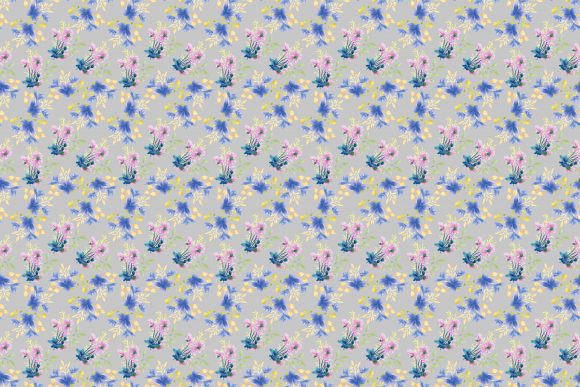
The Practical Workflow Benefits of a Watercolor Flower Seamless Pattern
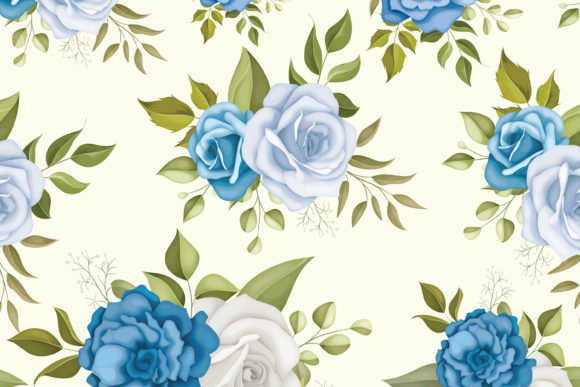
In creative and commercial workflows, the foundational assets you choose set the tone for everything that follows. A well-crafted Watercolor Flower Seamless Pattern is not merely a decorative graphic; it is a versatile, process-oriented tool that streamlines design implementation from the earliest planning stages to final product delivery. For professionals and creators managing projects across multiple mediums, its utility lies in its seamless nature and editable vector format, allowing it to integrate smoothly into established routines for branding, product development, and digital content creation.
Strategic Planning and Asset Selection
The initial phase of any design-centric project involves selecting core visual elements that will carry through the entire workflow. Choosing a Floral and Leaves Seamless Pattern at this stage is a strategic decision. Its seamless quality means it can tile infinitely without visible breaks, eliminating a common technical hurdle in background and wallpaper creation. This decision impacts subsequent steps: when you know your base pattern will work flawlessly across large surfaces, you can allocate your time to other creative or logistical tasks, rather than troubleshooting pattern alignment.
For entrepreneurs and small business owners, this pre-vetted asset becomes part of the brand toolkit. Imagine planning a seasonal marketing campaign. By starting with an editable AI and EPS file set offering unlimited color variations, you can swiftly adapt the same floral motif to different color schemes for social media banners, email headers, and website backgrounds, ensuring visual consistency without starting from scratch for each asset. This preparatory step directly enhances organizational efficiency and brand cohesion.
Integration into Diverse Production Workflows
The true test of any digital asset is how it interacts with other tools and platforms within a real-world workflow. A Watercolor Flower Seamless Pattern provided in layered AI and EPS formats is engineered for this integration. Designers working in Adobe Illustrator can manipulate every leaf and blossom, change colors on the spot, or resize the pattern without quality loss, directly within their primary software environment. This compatibility removes conversion steps and potential quality degradation that often interrupt a smooth creative process.
Consider the workflow for custom apparel or fabric design. A creator can open the layered AI file, edit the colors to match a client's palette, and then export the pattern for direct use in printing software or for sending to a manufacturer. The 100 pre-sizable vectors mean the pattern can be adapted for a small logo placement or blown up for a full-wrap dress fabric, all from the same source file. This interoperability with production tools is a critical factor for professionals who need to maintain quality control from digital design to physical product.
Enabling Iteration and Adaptation During Projects
A project's direction often evolves during its execution. An asset that locks you into a single look can become a bottleneck. The provision of unlimited color variations within the layered files supports this need for mid-project adaptation. A blogger might begin using a pattern with soft blues for a spring-themed series, but later decide to shift the content's tone for autumn. Instead of searching for a new pattern, they can edit the color layers in minutes to feature warm oranges and browns, keeping the recognizable floral style while refreshing the content. This flexibility supports long-term use of the asset across multiple projects or campaign cycles, maximizing the return on the initial resource investment.
For marketers and publishers, this means a single pattern can serve an entire year's content calendar, with each month featuring a color-adjusted version. This approach not only saves time but also builds a subtle, consistent visual identity that audiences subconsciously recognize.
Practical Implementation for Specific Outcomes
Understanding how to implement the pattern effectively requires mapping it to specific use-case workflows. Here are observations on integrating it smoothly for common goals.
For Digital Backgrounds and Wallpapers
The process here is straightforward but benefits greatly from the asset's specifications. After editing the pattern to your desired colors in Illustrator, export a high-resolution PNG or JPG. For website backgrounds, apply it via CSS; for desktop or device wallpapers, set the exported image directly. The seamless guarantee means no matter the screen size or resolution, the pattern will tile perfectly without manual adjustment, a key factor for usability and final presentation quality.
For Physical Product Design and Wrapping
This workflow involves more steps and coordination. Once your pattern is finalized in the AI file, you must ensure the export settings match the requirements of your printing service or wrapping paper manufacturer. The vector EPS format is often the preferred file for commercial printers due to its scalability. Communicate with your printer early to confirm their preferred specs—this preparation avoids last-minute file format issues. Having 100 editable vectors also allows you to create derivative motifs; you might isolate a single flower cluster from the pattern to use as a repeating element for a smaller-scale wrapping paper design.
For Fabric and Clothing Applications
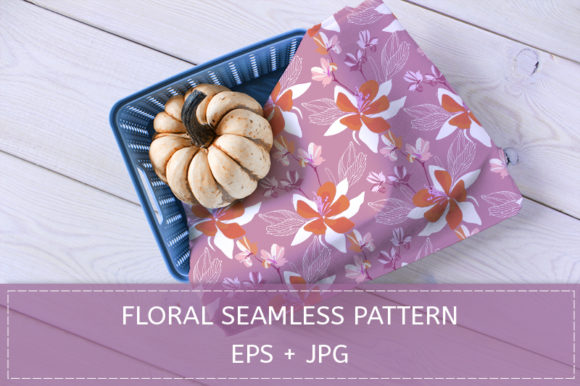
Integrating the pattern into this workflow hinges on the editable layered files and pre-sizable vectors. Fashion designers or hobbyists can experiment with scale before committing: test the pattern at different sizes on a digital mock-up of the garment. The layered colors allow you to match brand pantones or seasonal trends precisely. A crucial tip is to request a print proof from your fabric supplier using your exported file to check color accuracy and pattern alignment on the material, an essential step for quality control before full-scale production.
Long-Term Asset Management and Reusability
A significant advantage of a professionally created vector pattern pack is its role in your long-term digital asset library. Properly organized, these files become a go-to resource for future projects. Store the original AI and EPS files in a clearly labeled cloud or local directory alongside your other brand assets. Over time, you might build a collection of your own color variants saved as separate files, creating a custom palette that reflects your brand's evolution.
For freelancers and educators, this reusability translates to efficiency. A teacher might use the pattern for classroom decoration one year, and the next year, quickly recolor it for a different theme. A freelancer can offer clients variations based on the same high-quality source pattern, speeding up proposal and design phases. This organized, long-term approach turns a single purchase into a sustainable component of your creative or professional process, reducing the need for constant new asset searches and keeping your output consistently high-quality.
Ultimately, a Beautiful Floral and Leaves Seamless Pattern transcends its aesthetic role. When selected and utilized with an understanding of workflow integration, it functions as a practical tool that enhances preparation, ensures compatibility across platforms, boosts efficiency during execution, and safeguards the consistency and quality of the final outcome. Its value is realized not just in the beauty of the final product, but in the smoothness of the process that leads to it.