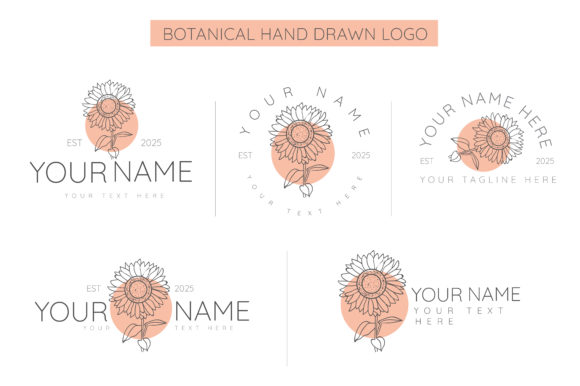
The Strategic Integration of Modern Botanical Hand Drawn Logo Assets
For entrepreneurs, designers, and brand creators, the initial visual identity of a project is not merely an aesthetic choice; it's a foundational business decision. The selection and application of logo assets, such as those found in a Modern Botanical Hand Drawn Logo collection, are critical steps in a broader workflow of brand development and communication. These resources serve as a pivotal starting point, a flexible middle-ground tool, and a long-term asset for consistency.
Positioning Botanical Logos within the Brand Development Workflow
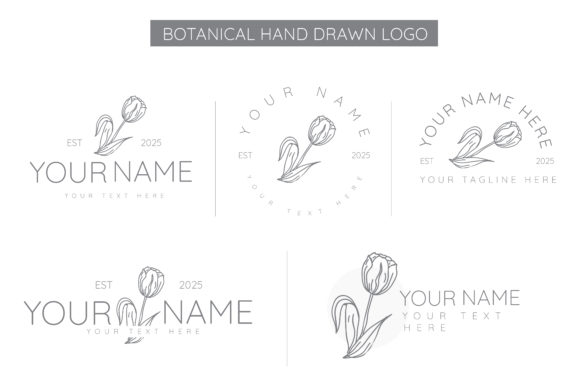
A Modern Botanical Hand Drawn Logo package is typically acquired at a specific phase in a project's lifecycle. For a new business or a rebranding initiative, it often acts as an early-stage catalyst. Instead of beginning with a blank canvas, a creator can evaluate a curated collection of botanical, floral, and natural motifs—like sunflower vectors or floral logos—against their brand's core values and target audience. This pre-made asset provides a tangible reference point, speeding up the conceptual phase and moving the project from abstract brainstorming to visual prototyping much faster.
During the active design and execution phase, these logos integrate directly with other tools and resources. The provided Ai and Jpeg files are designed for compatibility. The vector formats (Ai) allow for seamless import into professional design software like Adobe Illustrator, where they can be adapted, colored, and combined with other brand elements without loss of quality. The Jpeg files offer immediate usability for mock-ups, social media previews, or internal presentations. This dual-format approach supports a non-linear workflow; you might use the Jpeg for a quick website placeholder while simultaneously using the Ai file to craft a perfect print-ready version.
Practical Steps for Implementation and Organization
The practical process begins with downloading and accessing the package. After purchase, the typical step is to Extract the ZIP File. This simple act of organization—creating a dedicated folder on your drive for the brand assets—sets the stage for efficient long-term use. Place the extracted Ai, Jpeg, and any other files into a logical structure within your project directory. This prevents the asset from becoming a "lost file" and integrates it into your digital workspace from day one.
Next, conduct a quality and compatibility check. Open the Ai file in your vector software to verify scale, layers, and editable paths. Test the Jpeg in a simple layout tool or website builder. This initial audit is a minor but crucial quality control step, ensuring the asset meets your technical requirements and is truly "ready for work." It confirms the originality and utility of the design, aligning with the promise of a 100% original Design.
Integration with Complementary Tools and Platforms
A botanical hand-drawn logo does not exist in isolation. Its implementation involves interaction with numerous other assets and decisions. For instance, the logo's natural, organic style must harmonize with your chosen color palette, typography for wordmarks, and overall website or packaging design. The hand-drawn aesthetic might pair beautifully with rustic photography on an Instagram feed or clean, modern minimalism on a professional service site.
Consider also the platforms of use. A sunflower botanical logo might be scaled for a favicon on your business website, used full-size on your product packaging, and adapted into a simplified monochrome version for embroidered staff uniforms. Each of these applications requires a slight modification or export setting from your master Ai file. Planning for these variations at the start—creating a "logo use guideline" document for yourself—enhances consistency across all touchpoints.
For marketers and content creators, these logos become part of a recurring content workflow. The same floral logo asset can be used as a watermark on blog graphics, a base for seasonal social media campaign visuals, or an element in newsletter headers. By having the original vector file on hand, you can generate endless derivative graphics while maintaining absolute brand coherence, a key factor for audience recognition and trust.
Optimizing for Long-Term Usability and Efficiency
The true value of a well-integrated logo asset is realized over time. After the initial launch, the Modern Botanical Hand Drawn Logo should reside in a central, accessible brand asset library. This could be a cloud folder shared with team members, a dedicated section in your project management tool, or simply a well-named local folder. The goal is to prevent future inefficiency—never needing to "search for that logo file" again when a quick graphic is needed for a new promotional flyer or partnership deck.
Furthermore, consider the asset's role in future scaling. If your business expands into new product lines or services, the botanical theme can be extended. New icons, secondary graphics, or pattern elements can be designed in a style that complements the original logo, using its hand-drawn line work and organic feel as a creative blueprint. This makes the initial logo choice a strategic decision for scalable brand architecture.
Workflow Examples Across Professional Scenarios
For a small business owner launching an organic skincare line, the workflow might be: 1) Define brand ethos (natural, gentle, authentic). 2) Browse a logos collection for a matching visual tone. 3) Select and purchase a botanical logo package with relevant floral elements. 4) Extract and test the files. 5) Adapt the colors to match her product packaging palette. 6) Apply the final logo to her website, product labels, and Etsy shop banner simultaneously. 7) Archive the original files for future label variations or new product introductions.
A freelance web designer working for a client might use these assets differently. After client agreement on a botanical theme, the designer could source a professional botanical hand-drawn logo as a base asset. This accelerates the design phase, allowing more time to be spent on customizing the logo to client specifics and building the surrounding website layout. The designer informs the client on the proper formats supplied (Ai for future edits, Jpeg for immediate use), educating them on long-term asset management as part of the service.
For a blogger or educator focusing on gardening or wellness, the logo serves as a permanent brand header. The implementation is simpler but still requires a process: selecting a logo that reflects the content's niche (e.g., a sunflower vector for a sunny, positive blog), ensuring it is technically suitable for their CMS (like WordPress), uploading it, and perhaps creating a simplified version for a mobile-friendly site icon. The asset becomes a static but core component of their monthly content publishing routine.
Observations on Quality, Originality, and Final Outcomes
A critical part of the integration process is verifying that the asset supports the desired outcome: a professional, coherent, and distinctive brand presence. The assurance of quality and 100% original Design is not just a sales point; it's a workflow safeguard. Using an original, non-stolen vector logo prevents legal issues down the line and ensures that no other business has the exact same mark. This originality is a practical concern for trademarking and brand uniqueness.
In the end, the successful use of a Modern Botanical Hand Drawn Logo hinges on treating it as a dynamic component, not a static image. From its role in early planning, through active adaptation in design software, to its final placement across media and its archival for future use, each step is a link in a chain of professional execution. By understanding this entire process—from downloading the ZIP to considering long-term scalability—creators can leverage these assets not just for a one-time project, but as a lasting pillar of their visual identity workflow.