The Distinctive Appeal of Red Mallows, Red Leaves in Pattern Design
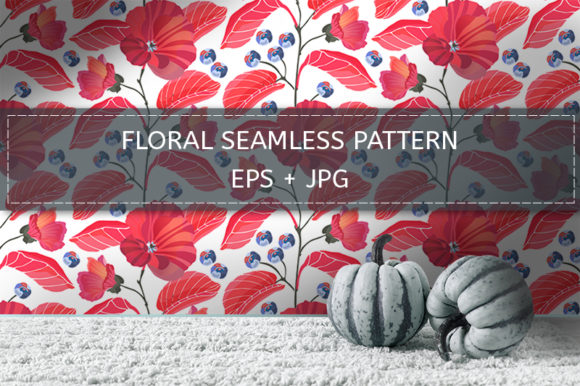
When sourcing or selecting a floral pattern for creative projects, the specifics of the design's composition, color palette, and technical execution are critical decision factors. A pattern like Red Mallows, Red Leaves, which depicts red mallows, branches, leaves, and blue berries on a white background, presents a unique aesthetic proposition. Understanding what makes it distinct from other botanical patterns, and where its strengths lie, helps designers, artisans, and businesses choose the right asset for applications ranging from textile design to digital backgrounds.
What Makes This Pattern Distinct: Botanical Accuracy and Contrast
The Red Mallows, Red Leaves pattern is not merely a generic floral arrangement. Its distinction stems from a deliberate botanical focus. The inclusion of specific elements—the recognizable mallow flowers, the detailed branches and leaves, and the contrasting blue berries—creates a scene that feels both natural and stylized. This is different from many seamless patterns that opt for highly abstracted or simplified flower forms. The pattern offers a level of identifiable realism, which can lend a project an air of authenticity or a specific garden-inspired theme.
Furthermore, the color scheme is a key differentiator. The use of red blooms against crisp white, accented with green foliage and blue berries, creates strong visual contrast. This makes the pattern inherently vibrant and legible. Compared to patterns with softer, monochromatic, or pastel palettes, Red Mallows, Red Leaves is designed to capture attention and provide a bold graphic element. This contrast can be a major advantage for projects requiring high visual impact, such as feature wallpaper or statement fabric.
Evaluating Technical Formats and Versatility
The provided file package, which includes an EPS 10 vector file and a high-resolution JPG (6000x4000 px), is a significant aspect to evaluate. The vector format is crucial for scalability and professional editing. Unlike a raster image alone, the EPS file allows the pattern to be resized infinitely without quality loss and edited in Adobe Illustrator—colors can be adjusted, elements rearranged, or the scale modified. This is a core strength for anyone needing to adapt the pattern for specific product dimensions, like fabric repeats or large-format wallpaper.
Comparing this to patterns offered only as PNG or JPG files highlights a tradeoff. While high-resolution JPGs are excellent for direct digital use (such as web backgrounds or mock-ups), they lack the editing flexibility of vectors. The dual-format package of Red Mallows, Red Leaves therefore serves a broader user base: graphic designers requiring editable vectors, and decorators or small businesses needing a ready-to-use high-quality image. The inclusion of the JPG imported into Photoshop also speaks to practical usability for those working primarily in pixel-based environments.
Use Cases and Ideal Project Fit
Identifying the best-fit situations for this pattern involves examining its characteristics against project requirements.
- Interior Textile and Fabric: The bold, contrasting colors and botanical detail can work well for statement upholstery, cushion covers, or curtain fabrics. Its natural theme aligns with contemporary trends bringing botanical elements indoors. However, its vibrancy means it may dominate a space; it is likely better suited for accent pieces rather than whole-room drapery if a subtler look is desired.
- Wallpaper and Tile Backgrounds: As a seamless tile pattern, it can create a dynamic wall covering. The white background helps prevent the design from becoming visually overwhelming, as the negative space provides balance. This pattern could be particularly effective in commercial spaces or residential areas aiming for a lively, garden-room aesthetic.
- Wrapping Paper and Digital Paper: For gift wrap or digital stationery, the pattern offers a premium, artistic look. The scale of the elements—the size of the mallows and berries—is important here. It may not be ideal for very small-format items where the detail could become lost, but for standard wrap sheets or digital backgrounds, it provides a cohesive and attractive design.
A realistic comparison involves considering the pattern’s style density. Some floral patterns are sparse and minimalist, offering a whisper of nature. Red Mallows, Red Leaves is denser and more illustrative. This makes it a powerful choice for projects where the pattern is the primary design feature, but perhaps less suitable as a subtle background texture behind complex text or other foreground elements.
When to Consider Alternatives
While Red Mallows, Red Leaves has clear strengths, there are scenarios where exploring alternatives is prudent. The decision factors often revolve around color requirements, stylistic tone, and needed flexibility.
If a project demands a softer, more muted color palette—such as for a calming bedroom textile or a corporate brand background requiring subdued tones—the bold reds and blues here might be too assertive. In such cases, patterns with analogous botanical elements but in creams, soft greens, or grays could be a better fit. Similarly, projects seeking an ultra-modern, abstract look might find the specific botanical realism of this pattern too traditional or illustrative.
Another consideration is element isolation. The description notes elements are “isolated on a white background.” This is excellent for clean application but means the pattern inherently relies on that white space. For a project needing a pattern that fills every inch of a canvas with color (a fully saturated background), an alternative pattern with a denser layout or a colored background would be necessary. Furthermore, if extensive customization is needed beyond color adjustment—such as removing the berries or altering the flower shapes—the vector format allows it, but that requires vector editing skills. Users without access to or proficiency in Adobe Illustrator might find a pattern available in more readily editable formats (like layered SVG) more accommodating, though the provided JPG is a straightforward fallback.
Balancing Artistic Style with Commercial Application
The pattern sits at an interesting intersection between fine art illustration and commercial repeat design. This balance is a key tradeoff to understand. The artistic detail enhances its value for premium products—it can elevate a material from generic to distinctive. However, that same detail might translate differently across various manufacturing processes.
For example, in digital printing on fabric or wallpaper, the detail will shine. In certain traditional printing methods or on very small-scale products, some finer line work might not reproduce as crisply. Evaluating the production method is therefore important. The high-resolution JPG file helps mitigate this for digital uses, but for physical applications, consulting with your printer about the pattern’s level of detail is a practical step.
Ultimately, choosing Red Mallows, Red Leaves comes down to aligning its distinctive properties—the specific botanical imagery, the bold contrasting color scheme, the dual-format technical package—with the goals of your project. It is a robust option for those seeking a vibrant, naturalistic pattern with professional-grade scalability. For projects requiring different tonal qualities, extreme minimalism, or a fully saturated field of color, assessing a range of similar patterns would be a natural part of the research process. By focusing on these concrete characteristics and comparisons, you can make a more informed selection that fits your specific design needs and application context.