Elevating Everyday Objects with Flowers Line Art Embroidery
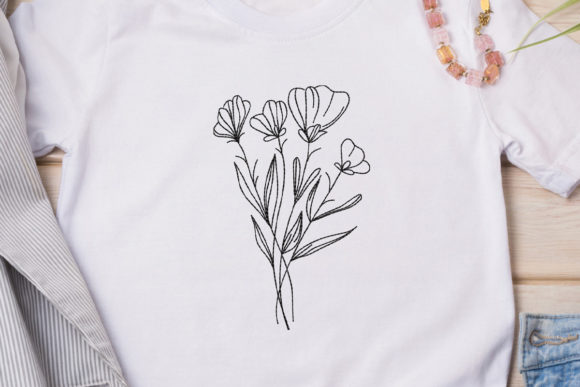
In a world saturated with color and visual noise, the subtlety of a single, elegant line can be breathtaking. This is the foundational appeal of Flowers Line Art and floral line art embroidery designs. Unlike intricate, shaded floral motifs, these designs strip the subject down to its essential form. They capture the graceful curve of a petal, the delicate branching of a stem, and the harmony of a blooming flower using nothing but clean, continuous stitches. The result is a modern, minimalist aesthetic that carries a timeless botanical beauty. This specific design format isn't just an artistic choice; it’s a versatile tool for personalization, transforming ordinary textiles into items of quiet sophistication.
The Anatomy of a Line Art Embroidery File
When you acquire a Flowers Line Art embroidery design, you're receiving a digital blueprint for your machine. It's more than just a picture; it's a set of instructions dictating the needle's path. The key characteristic here is the use of running stitches, satin stitches, and clever underlay to create outlines without fill. This technique requires precision in digitizing to ensure lines are smooth, corners are sharp, and the overall composition is balanced even when stitched out at various sizes. A quality floral line art embroidery design will come bundled in multiple file formats—such as .PES, .DST, .JEF, and .VIP—to ensure compatibility across brands like Brother, Janome, Husqvarna, and others. This multi-format offering is crucial, as it removes technical barriers, allowing the design to be used by hobbyists, professional embroiderers, and small business owners alike.
Where a Single Line Makes a Profound Impact
The applications are as broad as your imagination, but they particularly shine on items where subtlety is an advantage. A monochromatic Flowers Line Art design embroidered on a linen napkin or a cotton table runner elevates a dinner table from casual to curated without overwhelming the setting. On apparel, such as the collar of a blouse or the cuff of a denim jacket, it acts as a signature detail—a personal brand. The durability of embroidery makes it perfect for accessories: a delicate floral line art vine on a backpack or tote bag withstands daily use while adding a unique identifier.
Beyond wearables and linens, consider the soft touch of home decor. A scattered line art bouquet across a pillow cover or a single, striking bloom on a tea towel brings a cohesive, handcrafted feel to a living space. The design's scalability means the same file can be adapted for a small corner accent on a baby's bib or enlarged to become a central feature on a canvas wall hanging. It bridges the gap between craft and art.
Who Finds Value in Floral Line Art?
The audience for this style is diverse. General consumers and DIY enthusiasts appreciate its accessibility; it’s easier to stitch successfully than a complex fill design, often requiring fewer color changes and less thread. For creators and makers selling their wares online or at markets, Flowers Line Art offers a chic, scalable product line. A single design file can generate an entire collection of coordinated items—napkins, pillows, bags—all sharing the same aesthetic language. Business owners, such as those running small boutique hotels or cafes, might use these designs to embroider their logo (if botanical) or create bespoke linen items that reinforce a brand identity of clean, natural elegance.
Furthermore, online users seeking practical information are often looking for exactly this: a design style that is versatile, machine-friendly, and results in a professional-looking finish without years of expertise. Floral line art embroidery designs meet that need head-on.
Strengths and Practical Considerations
The primary strength of Flowers Line Art is its chameleon-like adaptability. It works on a vast array of fabrics, from delicate silks to sturdy canvas, because the linework is typically less dense than filled areas, reducing puckering risk. Its minimalist nature makes it incredibly versatile across genders, ages, and styles. From a business perspective, one design purchase yields endless product possibilities, offering excellent return on investment.
However, certain considerations are vital. The success of the final stitch-out hinges heavily on the quality of the digitizing. A poorly digitized line can look jagged or break easily. Testing the design on a similar fabric scrap first is always wise. Also, while less thread is used, precision in hooping and stabilizer choice remains paramount; a wobbly foundation will distort the clean lines. The aesthetic itself, while widely appealing, may not suit projects demanding bold, colorful statements. It is a choice for nuance.
Integrating Line Art into Real-World Projects
Imagine a scenario: you're creating a gift set for a wedding. Using a single floral line art embroidery design of intertwined stems, you stitch it onto the corners of a set of cotton napkins, the flap of a linen storage bag, and the front of a velvet pillow. The result is a cohesive, thoughtful gift that feels custom-made. In another instance, a small apparel brand wants to add a discreet, recognizable tag to all its garments. A tiny, unique floral line art emblem near the care label serves this purpose perfectly, branding the item without altering its main design.
For the home crafter, a weekend project could involve refreshing a plain canvas backpack. A meandering line art flower vine trailing from the side pocket transforms it into a one-of-a-kind item. The process is straightforward: select the design format for your machine, hoop the backpack panel securely, and stitch. The time investment is relatively low, but the impact on the object's identity is permanent.
Evaluating a Design for Your Needs
Before committing to a Flowers Line Art design file, ask a few guiding questions. First, examine the digitizing previews closely. Are the lines smooth? Does the design have a balanced composition? Second, check the provided formats against your machine’s specifications. Third, consider the scale. Does the design include instructions or suggestions for resizing? Will it retain its integrity if you make it very small for a shirt tag or very large for a tablecloth border?
Finally, match the design’s style to your project’s intent. A bold, geometric floral line art might suit modern home decor, while a softer, sketch-like line art could be ideal for baby items or personal wear. Remember, the beauty of this embroidery style lies in its intentional restraint. It’s not meant to shout. It’s meant to whisper a personal story, to add a layer of considered design to the functional objects that populate our daily lives. When chosen well and executed carefully, floral line art embroidery doesn't just decorate an item; it redefines it.